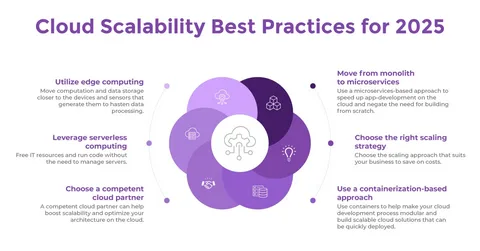
Cloud infrastructure has become a key enabler of business scalability in the digital economy. Instead of investing heavily in physical servers and data centers, organizations can rely on cloud platforms to scale resources dynamically based on demand. This flexibility allows businesses to grow without being constrained by infrastructure limitations.
One of the primary advantages of cloud infrastructure is elasticity. Companies can increase or decrease computing power, storage, and network capacity in real time. This is especially valuable for businesses with seasonal traffic, rapid growth, or unpredictable workloads. Resources are allocated efficiently, reducing both costs and operational complexity.
Cloud infrastructure also improves speed and agility. New environments can be deployed within minutes, enabling faster product launches and experimentation. Development and operations teams collaborate more effectively using shared cloud-based tools and services.
Security and reliability have also improved significantly in modern cloud platforms. Providers invest heavily in data protection, redundancy, and compliance standards. When combined with proper configuration and access management, cloud infrastructure offers a strong foundation for secure operations.
By leveraging cloud infrastructure, businesses gain the scalability, resilience, and flexibility required for sustainable long-term growth.